
Dentures
The cost-effective way to replace teeth in Dunstable
What are dentures?
Dentures are false teeth and are used to replace a missing tooth or missing teeth. Dentures are made up of an acrylic plate which contains one or more false teeth and is placed in your mouth during the day and then removed for cleaning after mealtimes and at night.
Dentures remain the most cost-effective way to replace missing teeth. In recent years, the upgrade in technology has meant that dentures are more personalised and better fitting.
Dentures typically last for between 5 and 10 years. After this time, dentures will need to be adjusted, or you will need to be fitted for new ones to ensure that they fit well and are comfortable in your mouth.
Book An Appointment
Types of dentures in Dunstable
We offer 3 types of dentures at Dunstable Dental Practice:
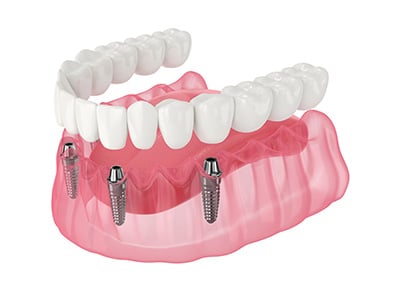
Full or complete dentures
As their name suggests, a full set of false teeth sit on the acrylic plate which fits over your gums. This type of denture is good for those patients who have no teeth or only have one or two natural teeth left.
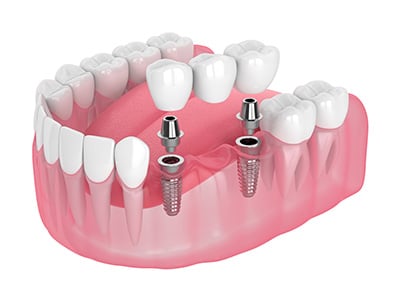
Partial dentures
Partial dentures contain several false teeth and are positioned on the acrylic plate in the exact place where you have missing teeth.
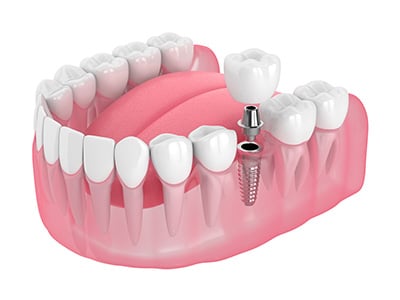
Overdenture
An overdenture or implant supported denture, is where the dentures are held in place by a clip to dental implants which sit permanently in your gums. The dental implant ensures that the dentures do not slip or move which can cause discomfort. This form of denture is growing in popularity because it combines the benefits of dental implants and is a more affordable option.
Are dentures available on the NHS?
If you are missing a tooth or missing many teeth, then you can get dentures on the NHS. This means that dentures are made and fitted at a reduced rate within NHS band 3 which can be seen in detail in our NHS fee guide.
How do dentures in Dunstable work?
Consultation
At your first appointment, we will examine your mouth and teeth and talk about what you would like to achieve with your smile. We will check to see how many missing teeth you have, and we may take x-rays at this stage.
Making the bespoke dentures
Next, we’ll take dental impressions of your mouth and teeth. These will be sent to our laboratory where your custom-made dentures are created. Once these are ready, there will be a “try-in” stage whereby you can preview the appearance and make any changes or adjustments.
Fit and wear of dentures
Once your personalised dentures are ready, we will invite you back to Dunstable Dental Practice and we will show you how to wear, remove and care for your dentures.
Benefits of dentures in Dunstable
Patients from Totternhoe, Dunstable, Houghton Regis, Sewell, Bedfordshire are choosing dentures because:
- Dentures will replace gaps in your mouth allowing you to smile again with confidence
- Replacing missing teeth with dentures mean you’ll be able to chew, speak and talk again
- Dentures are the most cost-effective way to replace missing teeth
- Replacing missing teeth with partial dentures protects the health of the remaining teeth you have
- By replacing missing teeth with dentures, your facial structure will have more support and not sag which can make you look older
- Modern dentures use materials like porcelain or plastic for the false teeth which give a natural-looking smile
FAQ's for Dentures
Will my dentures perfectly match my remaining natural teeth?
The highly skilled team working on making your custom-made dentures are experts in colour and shade matching so that they naturally match your remaining teeth. We are confident that you will be happy with the results.
Can I eat normally with dentures?
You may well find that eating with dentures takes a bit of getting used to but in time, you should be able to eat normally. Harder and sticky foods usually take longer for patients to feel comfortable eating. Your dentist can talk through this and give you hints on what you should do.
Is it painful to wear dentures?
If you’re new to wearing dentures, you may experience some minor irritation to your mouth and gums as you get used to dentures. This will gradually ease. If you’ve had a tooth or teeth extracted to wear dentures, you may find that your gum is painful, and you should take paracetamol to manage this. Again, this will ease in a few days.